By Jason Davis, director of Climate Stories ProjectMay is the height of seasonal drama in Massachusetts, where I make my home. The Earth thrums with a sensory overload of surging life: otherworldly pink and white blossoms erupt from magnolia trees, electric orange and black Baltimore orioles flash overhead, and mosses glow vibrant green after spring rains. I am especially attuned to the riotous soundscapes. The first-of-the-season “ee-o-lay..” of a wood thrush, or the ethereal chirping of spring peepers at dusk are quintessential sounds of the New England spring.  Wood thrush image by Vinson Tan. Wood Thrush recording by Imonacan, shared under Creative Commons licenses. Despite my delight in these auditory riches, I worry that listening carefully to the sounds of the Earth, and to each other, is becoming an endangered practice. I admit that I cringe when I see someone hiking through the woods yammering into their phone or plugging their ears with ear buds. I long to shake these folks: ditch the devices and listen! The world outdoors is so much richer than a tiny smartphone screen. What are we to do? For an antidote to this crisis of inattention, we can turn to the listening practices of Indigenous cultures from around the world. Place-centered cultures universally value attunement to the sounds of the environment and to the speech of others, honed from generational knowledge of living in an intimate relationship to the land and to community. You can scarcely afford to block off your hearing with headphones when your survival depends on focused attention to the sounds of animal movement, wind direction, and running water. Similarly, place-based cultures rely on the words and wisdom of elders and oral traditions for survival and connection. An example of this elevated approach to listening is the Aboriginal Australian practice of Dadirri: a means of listening intently to the sounds of the Earth and to each other with reverence, patience, and respect. Elder Dr. Miriam-Rose Ungunmerr from Nauiyu (Daly River) describes Dadirri: In our Aboriginal way, we learnt to listen from our earliest days. We could not live good and useful lives unless we listened. This was the normal way for us to learn—not by asking questions. We learnt by watching and listening, waiting and then acting. How unlike our hyperactive communication style, in which listening plays a distant second to speaking. Like most of us, I find it challenging to focus on the words, the tone, and to the cadence of someone’s speech without planning my next verbal move. However, when I manage to let go of this strategizing and just listen, I can feel the other person relax, even over a phone or Zoom call. Then we have a chance for a real connection, rather than a just having a “transactional” conversation. What does this have to with climate storytelling? Climate change is transforming the voice of the Earth. Many studies have documented steep declines in the diversity of insect and bird sounds over the past 30 years. But you don’t have to be a scientist to be aware of how soundscapes are changing with the climate. One of the most memorable stories I have heard was told by Inupiat elder John Sinnok from the frontline climate change community of Shishmaref, Alaska. I spoke with John in September, 2015 during a series of climate storytelling workshops I led with local high school students. At the end of our conversation, John mentioned that the sound of people walking through the snow has changed as the climate has warmed and the snow has become wetter. This sonic detail deeply moved me, and I wrote and recorded a music piece called Footsteps in Snow which features John’s words. 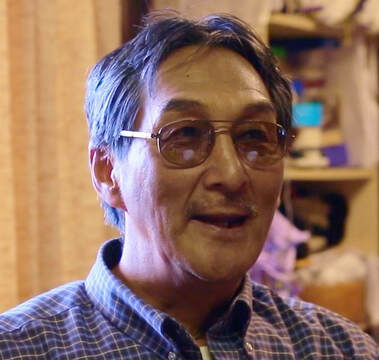 John Sinnok, 2015. Photo by Jason Davis The more I ask people to share their climate stories, the more I realize that storytelling should really be called story listening. Listening is the key to empathy and respect, qualities which are sorely needed these days to successfully confront the climate crisis. I cannot put this better than Henry David Thoreau, who wrote: The greatest compliment that was ever paid me was when one asked me what I thought, and attended to my answer.
1 Comment
|
 RSS Feed